Bought a new shirt or dress and got home to find the store left a security tag on it? It’s a common, frustrating problem — the garment is unwearable, and the wrong removal attempt can stain or tear it.
These are EAS (Electronic Article Surveillance) tags, used by retailers to deter theft. They come in a few types — magnetic, RF (radio frequency), AM (acousto-magnetic), and ink-filled — and each is removed differently. This guide explains how to identify the tag you have, the safe way to remove it, and the DIY mistakes that ruin clothes.
Short answer: the only reliable, damage-free way to remove an EAS tag is with a proper detacher — the tool retailers use at checkout. The fastest route is to take the item and your receipt back to the store. Here’s the detail.
How to Safely Remove Security Tags from Clothes
Step 1: Identify the tag type
Knowing the tag tells you whether it’s safe to handle and how it releases.
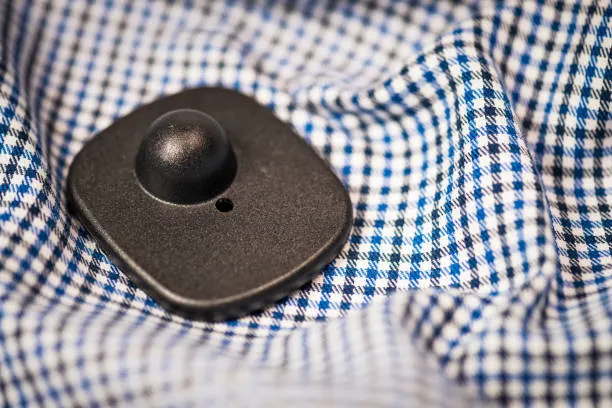
- Hard tags (most common on clothing): a rigid ABS-plastic tag with a steel pin pushed through the fabric and locked on the back – pencil, round, square, or lanyard shapes. The lock is magnetic and only releases with a detacher. Pulling won’t open it; it’ll tear the fabric first.
- Ink tags: a hard tag with a visible dye reservoir (a clear or coloured dome). Do not force these – they’re built to burst and stain the garment permanently if tampered with.
- Soft / adhesive labels: flat sticker-style RF or AM labels stuck to the product or packaging. These are deactivated at checkout, not removed, and are harmless to keep once you’ve paid.
Step 2: Use a detacher - the correct tool
EAS hard tags are opened with a detacher, the same device used at the checkout counter. The lock is a magnet, and it only releases under a strong enough magnetic field — a proper detacher delivers well above 5,000 Gauss (commercial detachers run 10,000–18,000 Gauss). A fridge magnet or ordinary magnet won’t come close.
A detacher releases the pin cleanly with no damage to the fabric. That’s why store staff remove a tag in seconds — they’re using the exact tool the lock was engineered for, not brute force.
Step 3: Avoid DIY damage
Searches for “how to remove a security tag with pliers/screwdriver/rubber band” lead to the methods most likely to ruin the garment:
- Pliers / cutting: tears fabric and seams, especially on knits and delicates.
- Forcing an ink tag: ruptures the dye reservoir — permanent staining, no recovery.
- Screwdrivers / prying: snaps the pin and can leave it lodged in the cloth.
If you don’t have a proper detacher, stop here. The garment is worth more than the few minutes saved.
Step 4: Return to the store (safest route)
Before trying anything at home, take the item back to where you bought it. Staff have the correct detacher and can remove the tag in seconds, at no cost and no risk to the garment. Bring your receipt as proof of purchase.
Step 5: Prevent it next time
- Check at the counter that every tag has been removed before you leave.
- Keep your receipt until you’ve confirmed the purchase is tag-free.
Detacher vs. DIY: Quick Comparison

Why Returning to the Store Is the Safest Way
Store staff have the right detacher, do it in seconds, and take on the risk — not you. No torn seams, no burst ink, no broken pin stuck in the fabric. If the store is far, many retailers will also remove a tag from any of their branches; call ahead and bring the receipt.
Video Tutorial
For a visual walkthrough, watch our short tutorial:
What Are EAS Tags and How Do They Work?
EAS tags are small anti-theft devices attached to merchandise. They work with three components:
- Tags / labels — hard (reusable) or soft (single-use), attached to products.
- Detection gates — installed at exits; they emit a frequency that triggers an alarm if an active tag passes through.
- Detachers / deactivators — used at checkout to remove hard tags or deactivate soft labels so paid items pass through silently.
When a purchase is rung up legally, staff remove or deactivate the tag — which is exactly the step that gets missed when a tag ends up coming home with you.
FAQs
Q1. Can I remove a security tag at home?
Only safely if you have a proper detacher. Without one, DIY methods (pliers, screwdrivers, prying) usually damage the garment, and ink tags can burst and stain it permanently. The safest option is to return to the store.
Q2. What tool removes security tags?
A detacher — either a magnetic detacher (a strong magnet that releases the lock) or a mechanical one. It’s the same tool retailers use at checkout, and it removes the tag without harming the fabric.
Q3. What happens if an ink tag breaks?
The dye reservoir ruptures and stains the clothing permanently. Ink tags are designed this way to deter theft, so they should never be forced — take the item back to the store instead.
Q4. Why is it safer to go back to the store?
Staff have the correct detacher, can remove the tag in seconds at no cost, and carry the risk of any damage. Bring your receipt as proof of purchase.
About SureSolutions
SureSolutions, a division of Deki Electronics (leading manufacturer of film capacitors in India since 1984), builds retail security made in India: SureCheck® EAS systems (AM, RF, and AM+RF hybrid gates, with 25,000+ installations), SureTag™ EAS tags and labels, and the high-strength detachers that remove them. If you’re a retailer looking to cut shrinkage without slowing checkout, contact us to find the right setup for your store.